Free · 20 Minutes · Zoom · No Pressure
The Story Behind 518 Guitar
A guitar coach shaped by resilience, real life, and 11,000+ lessons.
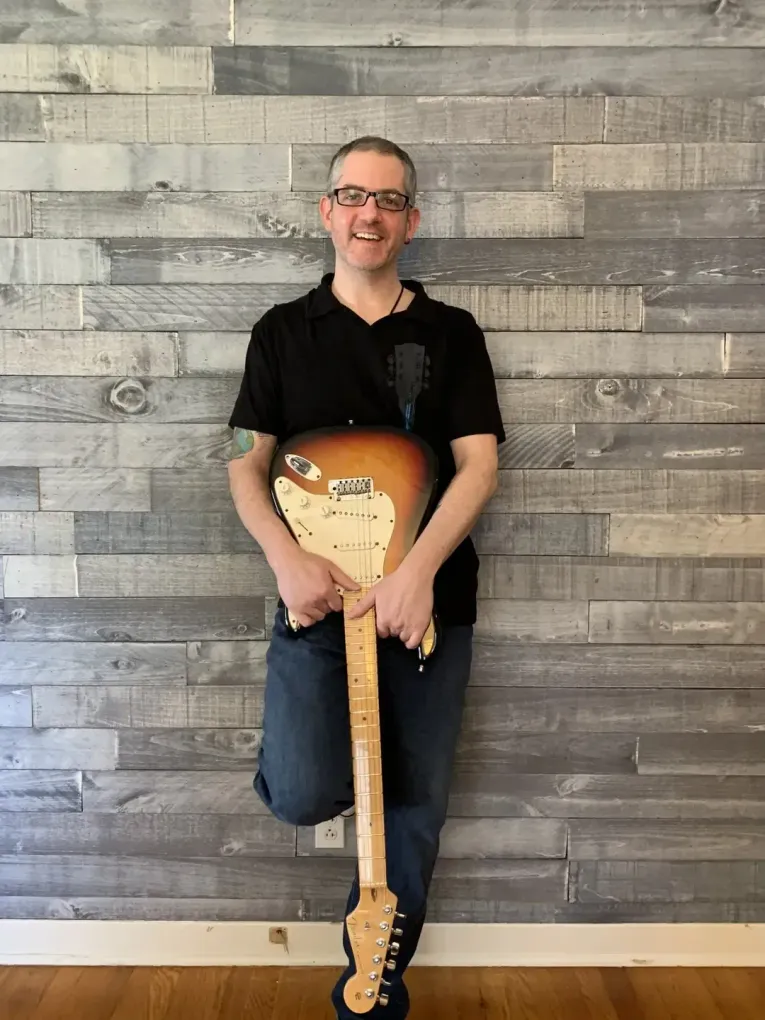
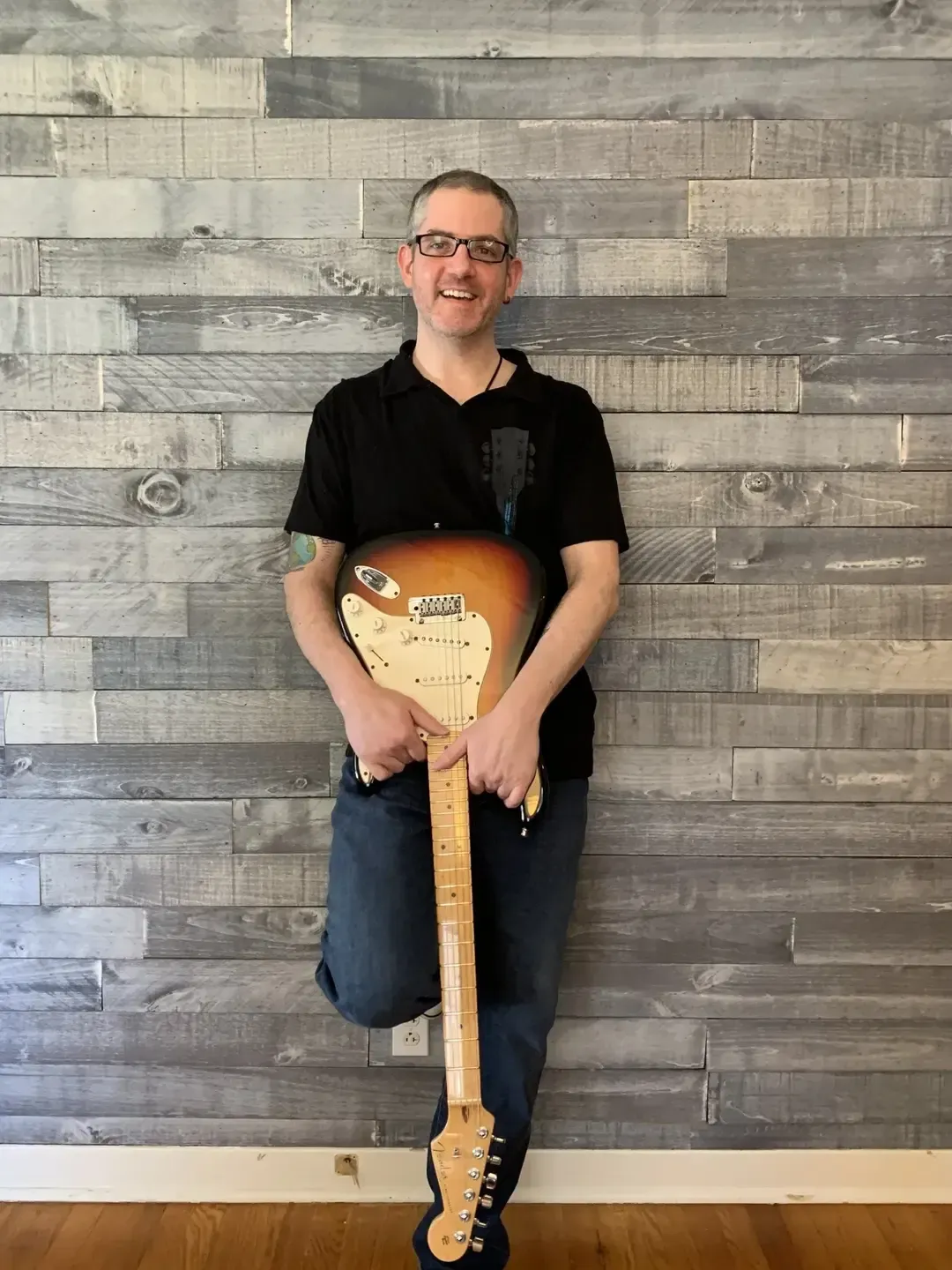
Andrew Wheeler is a Berklee-certified guitar coach and higher-ed learning specialist based in Albany, NY. His teaching is built on decades of lived experience, deep empathy for adult learners, and a belief that real progress comes from vision, goals, and accountability.
THE ORIGIN
It started with a red and white electric guitar and a grandfather who refused to quit.
My grandfather was musical in that rare, natural way — the kind of player who could hear a melody once and find it on the fretboard without ever looking at a piece of sheet music. He had a red and white electric guitar that I was completely fascinated by as a kid. When he plugged it into his amp, I felt a tingle in my stomach and my brain simultaneously. I didn't have words for it then. Now I do: that was the moment music got into me.
He had suffered two strokes and lost significant use of his left side. His left hand was partially frozen. But that didn't stop him — not even close.
When he wanted to play, he would use his right hand to pry his left hand open, finger by finger, and place them on the fretboard. Sometimes it was my job — nine or ten years old — to hold the guitar steady on his lap while he worked his hand open. Sometimes he had me gently open his fingers so they'd reach the strings, his thumb finding its place behind the neck.
He had developed his own system entirely. Two fingers. Adjacent strings. He understood intuitively that guitar strings are tuned in perfect fourths — so his ear knew exactly what to expect as he shifted his hand up and down the neck. Simple, elegant, completely self-invented. He could play any melody he loved using nothing but that two-finger adaptation.
I didn't know it then, but I was watching the VGA Method in its earliest form: a clear vision, a goal adapted to real constraints, and the quiet accountability of a man who simply would not accept that his body could take music away from him.
I have never forgotten that.
THE BEST FAILURE OF MY LIFE
When I was 14, my first guitar teacher fired me. It's the best thing that ever happened to me.
My grandfather eventually lent me his Yamaha acoustic so I could take proper lessons. I was fourteen, hungry to learn, full of equal parts alternative rock and blues — a strange combination that somehow made complete sense to me.
My first teacher wanted none of it.
Lessons with him followed a grim routine. He would place sheet music in front of me, roll his chair to his desk, and spend the thirty minutes reading a book, writing a shopping list, or balancing his checkbook. He never made eye contact. When I hit a wrong note, he would call out from across the room — "Nope. That should be an E. Try again." — without looking up.
At the end of the summer, he informed my mother that I didn't have any talent, and that if I wanted to continue, I should find a teacher better suited to beginners.
I was heartbroken. My mom walked me back to the car, put her arm around me, and said: if you really want to learn, we'll try again.
I didn't feel much like trying again. But after a while, that dusty guitar in the corner held enough allure that I picked it up anyway.
And here we are. Thirty-four years later.
I've played stages large and small. I've been sober and I've been drunk, happy and devastated, married and divorced, in the pits and at the peak of what I'm capable of as a musician. Through all of it, the guitar has been the constant.
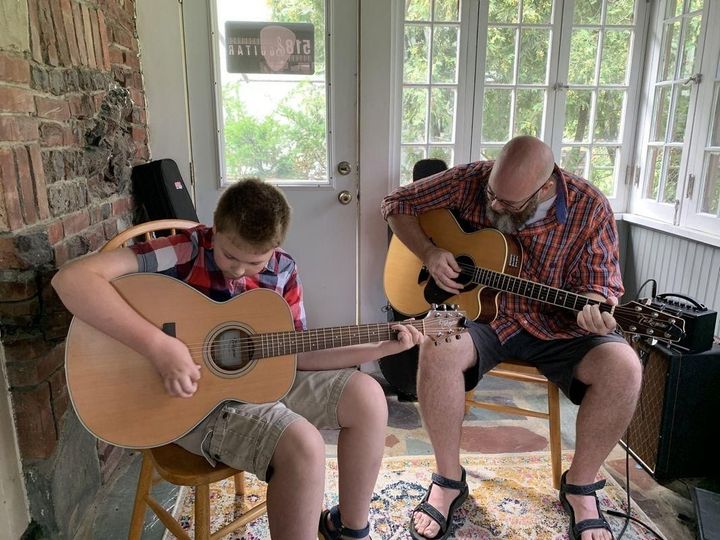
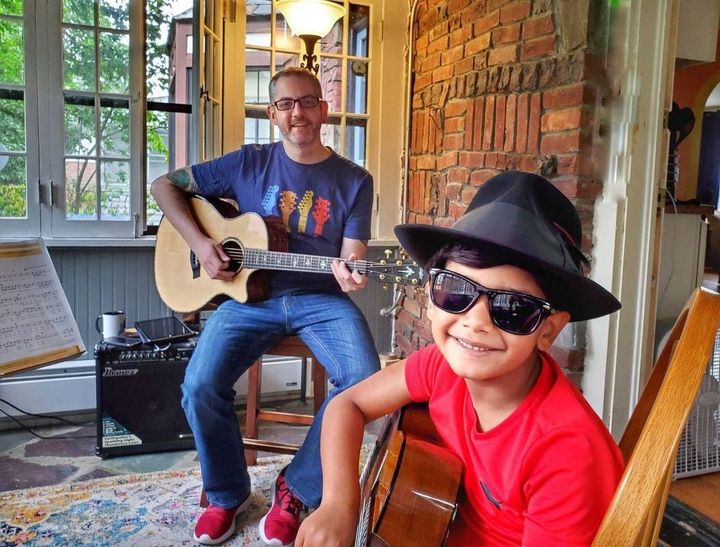
I have never forgotten what it felt like to be told I wasn't good enough. And I have never, in over 15 years of teaching and more than 11,000 lessons, made a student feel that way. Not once.
That teacher didn't break me. He defined me. And if you've ever been told — by a teacher, a parent, a voice in your own head — that you're not musical enough? I built this for you.
THE BACKGROUND BEHIND THE METHOD
I didn't just become a guitar teacher. I became a specialist in how adults learn.
My path has never been a straight line — but looking back, every step was pointing toward the same destination.
I earned my Master's degree at the University at Albany. I became a Berklee College of Music certified instructor. I spent years as a senior academic advisor, carrying a caseload of over 1,000 adult students — helping them navigate the complexity of returning to education as grown-ups with real lives, real fears, and real reasons to succeed.
I watched what happened when adult learners had structure, support, and someone who genuinely believed in their potential. I watched what happened when they didn't. The difference wasn't intelligence or talent. It was almost always clarity, accountability, and a goal worth working toward.
Today I work as an assessment analyst in higher education — measuring how people learn, identifying where progress stalls, and building systems that produce real outcomes. I bring that same analytical lens to every coaching student I take on.
When I developed the VGA Method — Vision, Goals, Accountability — I wasn't inventing something new. I was formalizing what I had watched work, over and over again, across two entirely different fields. Music education and academic advising turn out to have more in common than most people realize. Adults learn the same way whether the subject is a degree or a guitar. They need a reason that matters. They need a path that's clear. And they need someone in their corner who actually shows up.
WHY THIS WORK MATTERS
I'll be honest with you. Sometimes I cry thinking about my students.
Not from sadness. From the sheer weight of what music can do for a person when the right conditions are in place.
JJ had multiple sclerosis. Her doctor told her she would never be able to play guitar fully. She learned anyway — song by song, week by week. Sometime later, she ran into that doctor. She played guitar in his face.
I love that story more than I can say.
Mike Perkins came to me strumming a bit on his couch. He learned his first embellishments between chord transitions. Then full songs. Then he started playing open mics. Now he gigs as a singer/guitarist at farmers markets. That couch feels like a very long time ago.
Amy was scared and nervous. We worked closely together on song learning, performance and dynamics. She pulled up a chair at an open mic and played Blackbird by the Beatles. It was one of the most beautiful renditions I have ever heard. The room felt it.
Bernadette walked into an ice cream shop open mic and played three songs. Three songs she had worked for, prepared for, shown up for. Tommy joined a band. Jorge found me online from across the country because my teaching approach was what he had been looking for and couldn't find locally. Andy crushed it at the campfire with his family. Peter, in far away San Francisco, worked with me to learn an acoustic version of Little Wing. I pulled together a small studio band in Albany, NY, recorded the backing track, and he recorded his guitar at home with it - dream accomplished.
And then there was Tom — the moment I showed him that he could simply lift and shift fingers two and three to move between C and G. Two chords that had blocked him for years. His face in that moment — the understanding arriving in real time, the sudden ease of something that had always felt impossible — that is the moment I do this for. I’ll always remember the quote, “This was the single most valuable thing I’ve ever learned on guitar”. After that, he was off to the races, playing his favorite folk, acoustic, and irish tunes.
There have been hundreds of those moments. I am grateful for every single one.
A Note For You
If any part of this page felt familiar — this is for you.
Maybe you picked up a guitar years ago and got so far — and then stalled. Maybe someone once made you feel like music wasn't really for you. Maybe you've watched the YouTube videos, tried the apps, even taken a few lessons here and there — and you're still standing in the same place you were two years ago.
I know that feeling. I grew up with it.
What I also know — because I have watched it happen more times than I can count — is that the gap between where you are and where you want to be is almost never about talent. It's about having the right vision, the right plan, and the right person walking the road with you.
That's what I do.
I'm not the right coach for everyone. I work with a small number of students at a time, by design, because this kind of coaching requires genuine attention and genuine investment on both sides. But if you've read this far — if something on this page made you think yes, that's me — then I'd like to have a conversation.
Not a sales call. A real conversation. About where you are, where you want to go, and whether I'm the right person to help you get there.
While I'm very proud of every Google five-star review and each of my more than 11,000 lessons taught — I'd rather earn YOUR trust directly. Book your free discovery call and let's chat.