
The VGA Method · 10-Session Coaching Program · Online & Albany, NY
The VGA Method
This isn’t guitar lessons. It’s coaching that finally connects the dots.
The VGA Method is a 10-Session coaching program built around your vision, clear goals, and real accountability. Designed for adult guitarists in Albany, NY and online, it helps you stop drifting, follow a plan, and become the guitarist you’ve been trying to be.
THIS ISN'T LESSONS
Let's be honest about what traditional guitar lessons actually look like.
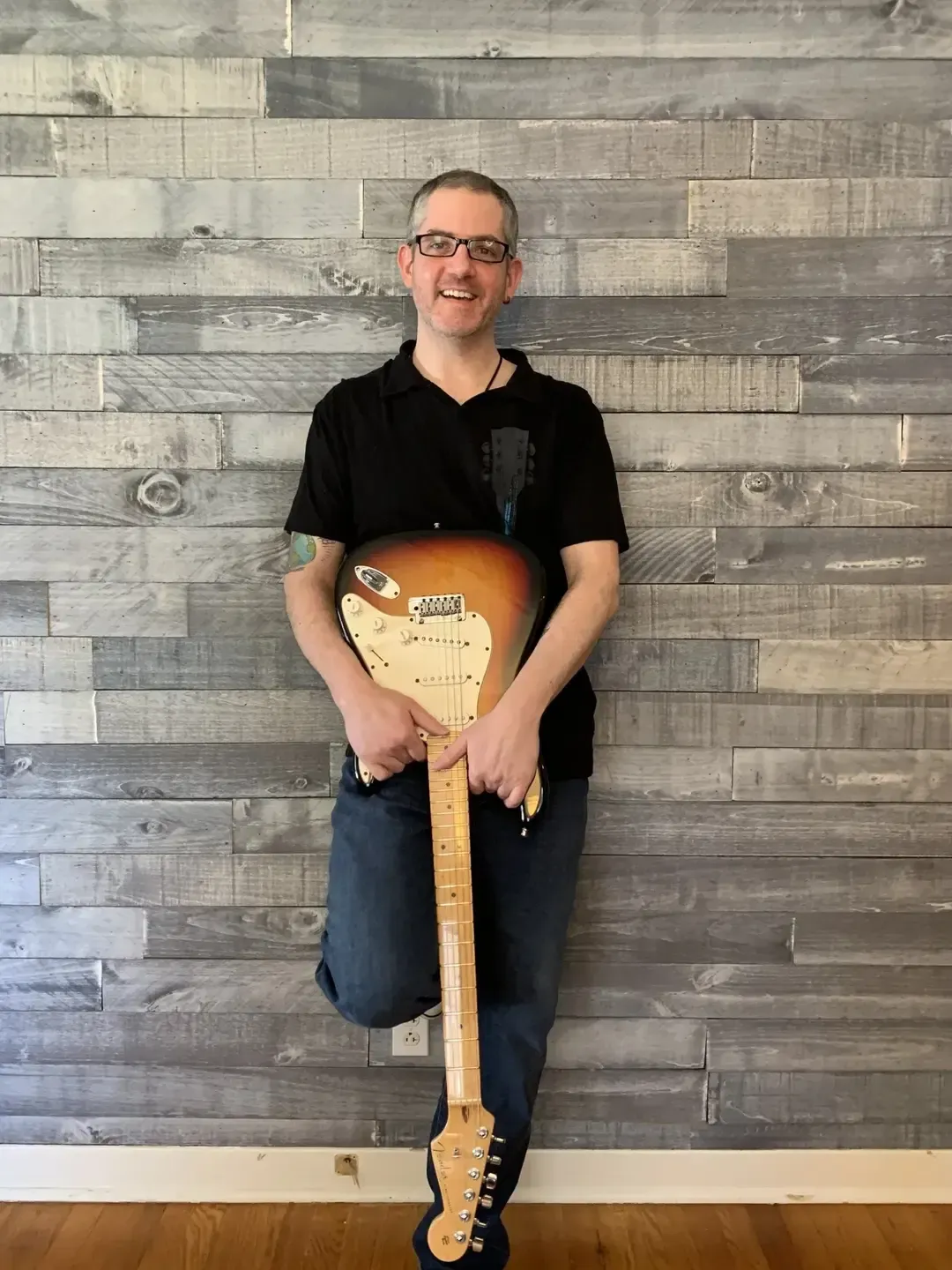

You drive across town — through snow, sleet, or a summer thunderstorm — to arrive at a studio and wait for the student before you to clear out of the space. You finally get settled. If you're an adult student, that takes a few minutes: find a spot for the case, unlatch it, slowly extract the guitar, attach the strap, locate your book, prop it on the stand, exchange a few pleasantries.
Before you know it, you're ten minutes into a thirty-minute lesson.
And then — because you didn't quite get to the practice this week, and something on YouTube caught your eye — you mention that new thing you watched. A different technique. A different song. A shiny new direction. Your teacher, trying to be accommodating, follows your lead. It feels productive. It feels like learning.
It isn't. Not really.


Progress in traditional lessons does happen — but it's slow, duplicative, and expensive. The same ground gets covered week after week. The dots never quite connect. And the lesson ends with a rushed five-minute scramble: "Here's what to practice this week" — before the next student is already at the door.
Then you sit in rush hour traffic on the way home.
This is nobody's fault. It's just the nature of the traditional lesson model. And it's exactly why I stopped doing it.
A Better Way
I used to hand students a plan. Then I realized the plan wasn't the point.
Early in my teaching career, I developed something I called the Guided Learning Plan — a structured, personalized roadmap for each student. It worked better than winging it. Students made real progress.
But I kept noticing a gap. The plan alone wasn't enough. Students needed more than clarity about what to practice. They needed a vision worth working toward — something real and personal that made showing up matter. They needed goals that were honest and achievable, not vague and overwhelming. And they needed someone in their corner, week after week, keeping them accountable when life got in the way.
I've spent my career in higher education — first as a senior academic advisor managing a caseload of over 1,000 adult students, now as an assessment analyst studying how people learn and grow. I've watched adult learners succeed and struggle up close, and I know what makes the difference. It almost never comes down to talent. It comes down to structure, support, and a reason that matters.
That realization — combined with 15+ years of guitar instruction, Berklee certification, and a deep belief in what adult learners are capable of — is how the VGA Method was born.
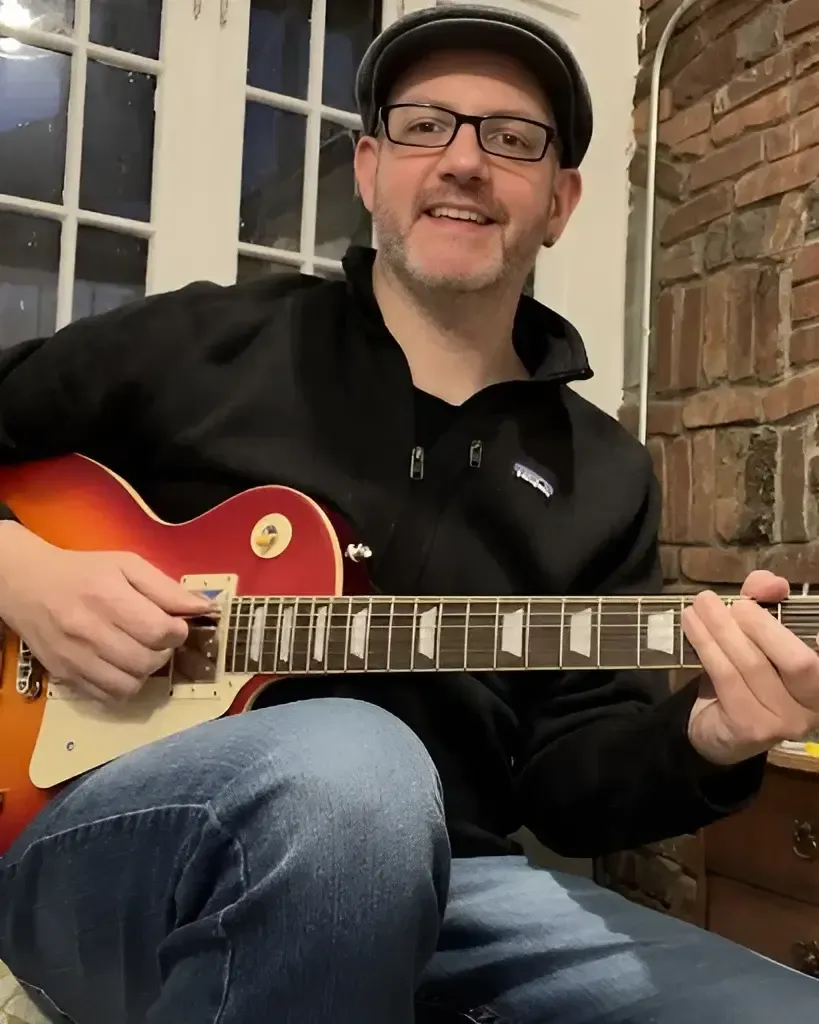
THE VGA METHOD
Vision. Goals. Accountability. In that order. Every time.
The VGA Method isn't a curriculum. It's a coaching framework — one that has helped dozens of students go from stuck and frustrated to genuinely musical. Students who went on to record their first EP at home. Students who joined bands, became gigging singer-songwriters, played their first open mic, and stood up at their daughter's wedding and played a song that made the room cry.
It works because it starts with you — not a syllabus.
Formula display: Vision + Clear Goals + Accountability = Success Follow the plan. Show up. The outcome is not optional.
Vision
Before we touch technique, we talk about what you actually want. Not "I want to get better at guitar" — that's not a vision, that's a wish. A vision is specific and personal. It has a date, a place, a person, a feeling attached to it.
Maybe you want to play five sing-along songs around the campfire at your lake house on Labor Day. Maybe you want to record a simple song for your partner's birthday. Maybe you've always dreamed of walking up to an open mic and not falling apart.
Whatever it is — that's our north star. Every decision we make together points back to it.
The why behind the work
Goals
Once we know where you're going, we build the road. Clear, bite-sized, sequenced milestones that move you forward without overwhelming you. A personalized practice plan that tells you exactly what to do, for how long, and why — so you never sit down with your guitar and stare at it blankly.
No chasing shiny objects. No YouTube rabbit holes. One path, designed for you, adjusted as you grow.
This is where my background in learning assessment earns its keep. I don't guess at what you need — I observe, I analyze, and I build a plan that reflects how you actually learn.
The path that makes the vision real
Accountability
This is the secret ingredient. And it's the reason the VGA Method works when everything else hasn't.
Every week, I'm watching. I can see your technique. I can hear when something's off. I notice when you're avoiding the hard thing and reaching for the comfortable one. I celebrate the wins — because adult learners don't get nearly enough of those — and I redirect gently when the plan needs adjusting.
You are not alone in this. That changes everything.
The piece every other method leaves out
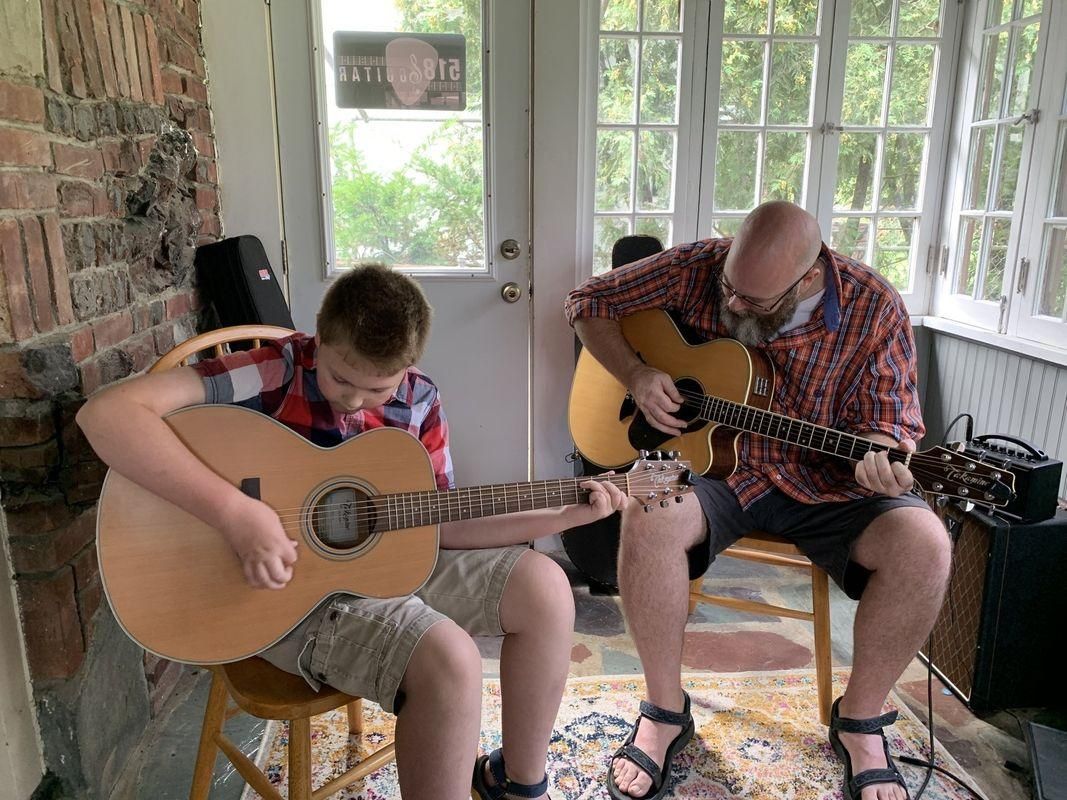
The Inner Game
The biggest thing standing between you and the guitarist you want to be isn't technique. It's the voice in your head.
Adult learners carry something kids don't: a lifetime of accumulated self-doubt. The internal voice that says I'm not musical enough. I've left it too late. Everyone else picks this up faster than me.
We address that directly. From day one.
Using mindfulness exercises, we work to quiet the performance anxiety spiral before it derails a practice session or a performance. Drawing on frameworks from Daniel Coyle's The Talent Code and Angela Duckworth's Grit, we build the kind of deliberate, focused practice that actually produces results — and the mental resilience to keep going when it feels hard.
Because here's the truth: the students who succeed with the VGA Method aren't the ones with the most natural talent. They're the ones who show up, trust the process, and refuse to quit. That's a decision, not a gift. And it's one you're fully capable of making.
WHAT 10 WEEKS LOOKS LIKE
A structured journey with a real destination.
By the end of 10 sessions, you won't just have learned some songs. You'll understand the fretboard, own a practice system, and feel — for the first time — like a real guitarist.
Every student's 10-Session program looks different — because every student's vision is different. But here's the shape of the journey:

Sessions 1–2: Foundation
We start with a deep-dive session. Your vision, your current playing, your technique, your instrument. We identify exactly what's blocking you and build your personalized plan from the ground up. If your guitar is working against your body — action, setup, size — we address it here. Feet firmly on the ground before we take a single step forward.
Sessions 3–5: Clarity
We work through the technical fundamentals that have been getting in your way — smooth chord transitions, strumming patterns, fretboard understanding — in the context of your actual goals. Nothing abstract. Nothing irrelevant. Everything connected to where you're going.
Sessions 6–8: Momentum
This is where it starts to feel different. The pieces begin to connect. Songs start to flow. We push deeper into your specific outcome — blues phrasing, jamming vocabulary, campfire strumming, song polish, performance prep — whatever your vision calls for. This is the time students start to surprise themselves.
Sessions 9–10: Arrival
We get you to the destination we set on day one. We prepare you for what comes next — whether that's an open mic, a recording session, a performance for someone you love, or simply the confidence to keep growing on your own wings.
WHAT'S INCLUDED
Everything you need. Nothing you don't.
1-on-1 coaching sessions
Private, online sessions tailored entirely to your goals and pace. No cookie-cutter curriculum. No wasted time. No rush hour traffic.
Personalized practice plan
Updated weekly. Tells you exactly what to work on, for how long, and why. No guessing, no staring blankly at your guitar, no falling down YouTube rabbit holes at 11pm.
Mindset + performance coaching
Mindfulness tools, proven learning frameworks, and honest conversations about the inner game of becoming a musician. Because technique alone doesn't get you to the campfire or the stage.
SKOOL community access
A private group of adult learners on the same journey. Weekly posts from Andrew, shared wins, peer support, and a place where nobody feels invisible.
Instrument fit check
Your guitar should work with your body, not against it. We assess setup, action, and fit in week one — and make sure the tool in your hands is helping, not hurting.
Local open mic access (Albany-area students)
When you're ready, a safe and supportive first stage is waiting for you. Student-only open mics hosted specifically for this moment in your journey.
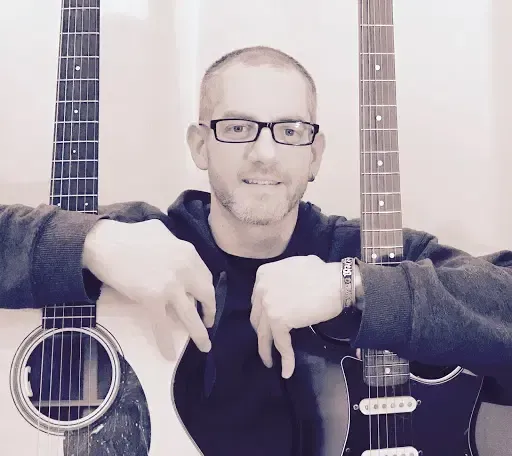
REVIEWS ARE A STARTING POINT. TRUST IS THE DESTINATION.
Why Trust Matters Here
There are plenty of guitar teachers in the Capital Region with decent reviews. Ratings tell you what someone else experienced. They don't tell you what YOUR experience will be — with your goals, your history, your instrument, your particular way of learning and getting stuck.
That's a conversation. And it's one I genuinely want to have.
"While I'm very proud of every Google five-star review and each of my more than 11,000 lessons taught — I'd rather earn YOUR trust directly. Book your free discovery call and let's chat."
— Andrew Wheeler, 518 Guitar
QUESTIONS
You probably have a few of these.
AM I TOO OLD TO REALLY IMPROVE?
No. Adult learners bring something kids don't — real motivation, life experience, and a genuine reason to play. The VGA Method is built specifically for adult brains and adult lives. Some of my most remarkable student transformations have come from people in their 50s, 60s, and beyond.
I'VE TRIED LESSONS BEFORE AND THEY DIDN'T STICK. WHY WOULD THIS BE DIFFERENT?
Because this isn't lessons — it's coaching. The difference is accountability, structure, and a vision that is actually important to YOU. An experienced guitarist will be in your corner as your ally and partner - helping when it matters the most. The majority of traditional lessons fail adult students because they're designed around children and drop-in convenience. This is designed around you and your outcome.
DO I NEED A GOOD GUITAR TO START?
Yes, you need a guitar that fits your body and plays in tune. We'll assess that together in week one. If something needs to change, I'll point you in the right direction — without pushing you toward anything unnecessary or expensive.
WHAT IF I MISS A SESSION?
Life happens. We build flexibility into the program. What matters is your commitment to the overall journey, not perfection session to session.
HOW MUCH DOES IT COST?
Tuition details are discussed on your discovery call — where we can make sure the program is the right fit before anyone commits to anything. No pressure. No surprise pitch. Just an honest conversation.
LIMITED SPOTS AVAILABLE EACH SESSION
If you've read this far, you already know this is different.
The only question is whether you're ready. I work with a deliberately small number of students at a time — so that every person gets the attention, the accountability, and the results they came for.
The first step is a free, no-pressure discovery call. We'll talk about where you are, where you want to go, and whether the VGA Method is the right fit.
While I'm very proud of every Google five-star review and each of my more than 11,000 lessons taught — I'd rather earn YOUR trust directly. Book your free discovery call and let's chat.