
⭐⭐⭐⭐⭐
I had a great lesson with Andrew! It was my first time playing the guitar and I wanted to find out if I liked it. Andrew made it a great experience and I am so excited to keep learning.
- Mitchell Givens
Your First Guitar Lesson - How to Prep and What to Expect
My purpose here is to be your beginner guitar buying guide. This article will assist you in feeling focused, prepared and knowledgeable before stepping foot in your local musical instrument shop - or - before clicking your mouse and spending your hard-earned money on a new beginner's guitar.
You are probably curious about the cost, quality, size and style of guitar to purchase. You cannot always count on the sales rep to know best. There is intense pressure on sales reps, especially during big sales or the holiday season, to move product. They have goals
Sometimes a very cheap, poorly made guitar gift to a child is actually a burden to the parent/guardian, and a frustration for the child. Now there is a child wanting or expecting lessons with a guitar that won't ever play right. Some can be fixed by a luthier or technician at $50/hour plus parts. Some can't. And then the family says, after pain and frustration on an instrument that can't be tuned, that the learner "didn't stick with it". I see this all. The. Time.
And hey - consider that a sax rental for your learner is on average $30 - $50/month. You're spending about $600 a year NOT own a brass instrument. A beginner sax can run you $1,850 - $3,000 to purchase. So why the hesitation to purchase a quality beginner guitar for $400 or $500?
Let's explore the three top questions I receive as a guitar instructor from parents, grandparents, and even those shopping for themselves.
DISCLAIMER:
If your learner is younger than 7, bookmark this article, then just buy a small size guitar off-the-shelf from Target or Walmart or Amazon cheapo ½ or ¾ size guitar. When they turn 8, if they are still taking guitar lessons, heed the advice in this article and go for a slight upgrade. Ok, you can stop reading now.
Here are the answers to the three biggest questions asked when buying a guitar
Question One: How Much Will I Have to Spend to Purchase a Playable Guitar?
Expect to spend anywhere from $200 to $500 USD.
Imported guitars make guitar playing and guitar lessons affordable for most Americans. Unfortunately, foreign guitar factories don't have the same quality control as U.S.-based factories, with some exceptions. To buy a decent guitar - one that does not fall apart, have seams that separate, parts put together correctly, and will last at least a couple of years - a buyer is going to spend well over $300 U.S.D.
A playable guitar means that the guitar's "action", or height of the strings above the neck, is low. This makes the strings easy to press down. Poorly made guitars often have high "action". In other words, while a first-time guitarist may be excited to receive their first guitar, very often they are not able to physically push the strings down to sound a note.
I teach guitar, and I've taught about 300 different students one-on-one over the years. It's rare to have a beginner walk in with an easy-to-play guitar unless they spent at least $300-$400 on it. This seems to be the "quality threshold".
There are a few beginner-specific companies like Mitchell, Luna and Dean who make decent acoustic guitars for $225 - $400.
Beginners are disappointed when they come for their first lesson and it becomes apparent that they will never be able to physically play their new guitar. I hand them one of my guitars and they can make wonderful notes and chords within minutes. Then they take their guitar back, and their newfound ability vanishes into thin air as their hands struggle against their guitar.
It sometimes means investing $250 of repairs into a $99 guitar from Amazon.com just to make it work right - and that's a jump most beginners can't make - especially when the guitar was a gift.
Let's address reliability as a part of our quality standards. A reliable guitar is one where the strings are easy to push down, all the parts work correctly, and it stays in tune well. An unreliable guitar is one where the strings almost immediately go out of tune due to poor quality parts. The student feels defeated when they work so hard to master a song but their guitar cannot be tuned.
Playing should not feel like a physical battle. Learning is hard enough. When you couple a normal learning curve with a poorly-made guitar, the student is not likely to continue. It can be an unrewarding process, no matter how persistent and diligent the student, and no matter how much money you pour into lessons.
Question Two: Should we buy "acoustic" or "electric"?
Electric guitars have lots of switches and knobs. This is a huge distraction for younger learners. And, they require a small speaker/amplifier to make them loud enough to hear. Most children end up just making static and noise come out of the amp. Practice time turns into playtime very quickly.
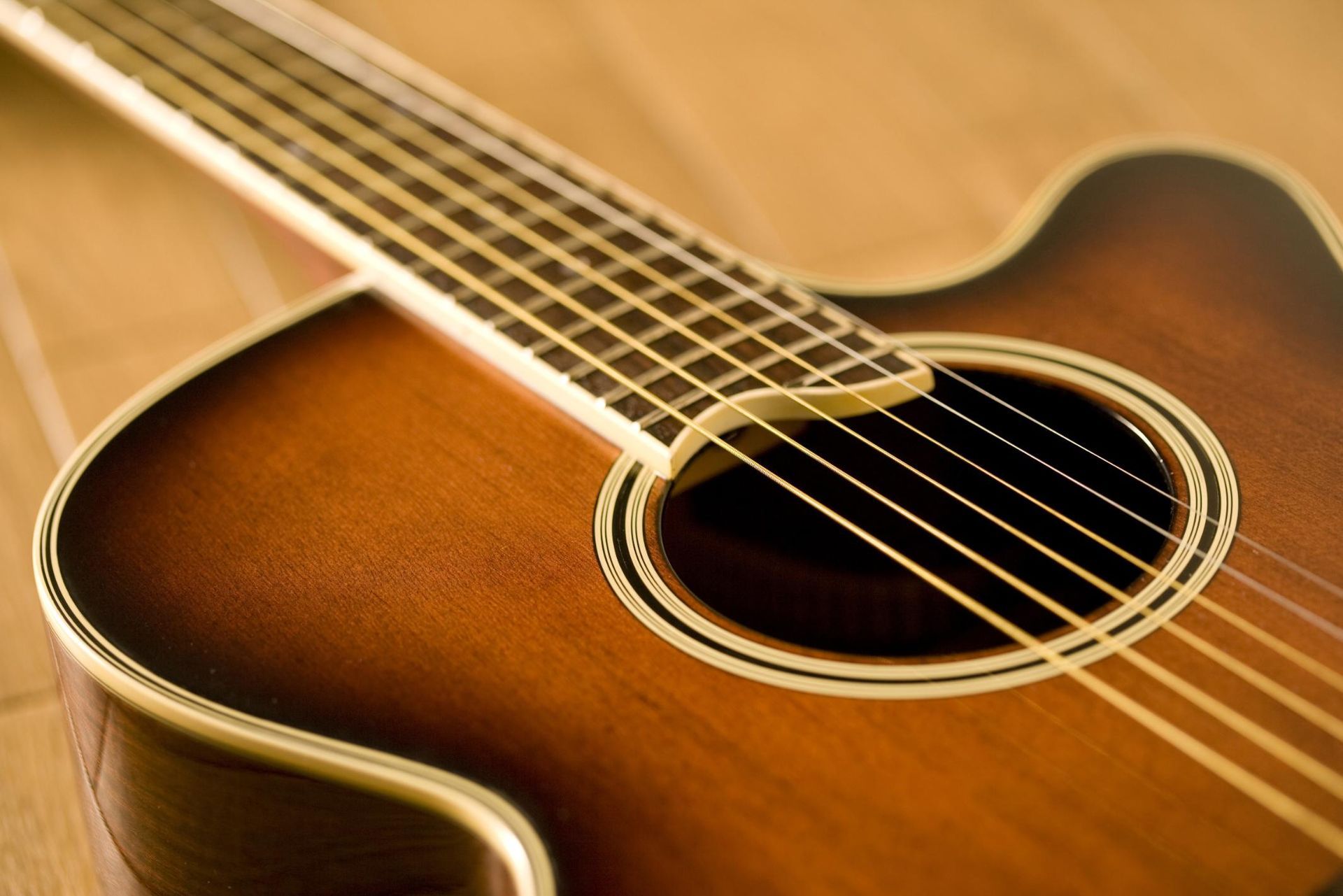
I recommend non-electric guitars for beginners of any age. These are called "acoustic" guitars. They are made of wood and have a round hole "called sound hole" in the body which the strings pass over. They do not require electricity to make a sound.
For younger learners 7-10, I recommend acoustic "nylon-string" guitars. Nylon strings are softer and rounder than steel strings. This reduces fingertip pain, which is the #1 complaint of young students.
Question Three: What size guitar should I purchase?
One size does not fit all.
This depends on the size of your learner. If you are buying for an adult learner, be as specific with the guitar sales rep as possible. Ideally, bring your learner to the store with you. A slighter-framed woman with smaller hands will require a smaller guitar than a tall man with large hands. If you cannot bring the guitarist to the store with you, make sure you check the return/exchange policy.
Children ages 7-12 usually do well with a "three-quarter" sized guitar. And little ones under 7 need a "half-size" guitar. Any well-stocked instrument store will have all these options in stock - though, admittedly, "half size" and "three-quarter" size can suffer in quality.
Trying to play a poorly-fit instrument is like buying a pair of shoes too small or large - you may be able to tolerate it a little here and there, but it's not going to work. It will present a clear and physical obstacle.
You are now ready to shop for that beginner guitar
The old adage rings true - "you get what you pay for". Is it possible to get a guitar "good enough" to start for under $200? Maybe. A big maybe. Quality control in that price range is more miss-than-hit. The guitar will be plywood - layers of compressed wood glued together and laminated with some sort of veneer. It will warp and crack quickly. The more you spend, the better the construction. The better the construction, the fewer issues now and in the future. The fewer the issues/easier to play, the higher the success rate for your new guitarist.
Summary Points (In ALL situations, be sure to invest a hard-shell guitar case with latches to protect the new guitar - ($40 - $100 additional):
- Ages 7-10: Nylon String Acoustic Guitar, ½ or ¾ size, ($125 - $250).
- Ages 10-14: ¾ size Acoustic Guitar. In early adolescence, if the student is mature and responsible, a full-size or ¾ size electric guitar may be just fine. ($250 - $350)
- Ages 14+: Any. Acoustic is less fuss and requires no speaker, but electric may be more motivating and fun. Talk with the learner, find out what kind of music they love, and tell your store rep for guidance. ($250 - $500)
Finally, talk to your sales rep about storage and maintenance. Weather and home heating/cooling systems wreck guitars. If you invest a hard, latching case - you can create a decent environment for the guitar for very little cost without worry. Even the best guitars won't last a northeast winter in a heated home. Avoid warping, cracking, buckling and breakage by using humidity control. Guitars are wood, and as such, are very fickle.
Recent Posts

Albany, NY & Online
Keep Your Guitar Safe and Sound
Embrace the digital age of learning. Inquire about our online guitar lessons now!
Our Location
158 Rosemont St, Albany, NY 12206, USA
- Mon - Thu
- -
- Friday
- -
- Sat - Sun
- -
Contact Us Now
Contact Us
We will get back to you as soon as possible.
Please try again later.